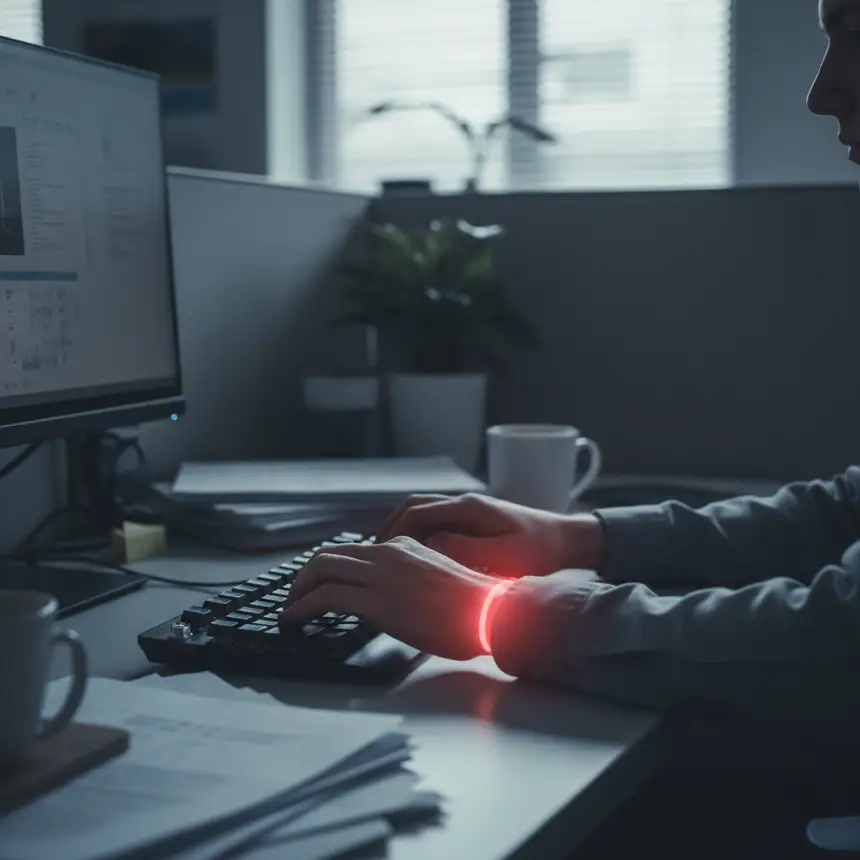
Eye strain headaches are primarily caused by ocular fatigue and tension. This article helps you understand their characteristics and causes, offering effective daily management and prevention strategies.

The Silent Signal: Recognizing Eye Strain Headache Symptoms
In our digitally-driven world, many individuals experience a specific type of discomfort known as eye strain headache. This sensation often manifests as a dull ache or pressure around the eyes, extending to the forehead, eyebrows, temples, and even behind the eyeballs. Unlike sharp, stabbing pains, it's typically described as a persistent, throbbing, or squeezing sensation, frequently affecting both eyes simultaneously.
You might notice these headaches intensify after prolonged screen time, such as working on a computer or scrolling through your smartphone. Closing your eyes can sometimes make the discomfort more palpable, and moving your eyes might exacerbate the pain. These symptoms suggest that the headache isn't just a random head pain but rather a direct consequence of ocular fatigue.
While eye strain headaches are usually not indicative of a serious underlying condition, their recurrent nature can significantly disrupt daily life. They can impair concentration, reduce productivity, and contribute to overall fatigue, diminishing your quality of life. Therefore, it's essential to move beyond simply tolerating the discomfort and actively seek to understand its root causes and implement effective management strategies. These headaches are commonly categorized as a form of ocular fatigue headache or tension-type headache, with eye usage habits and general tension being key contributing factors.
You might notice these headaches intensify after prolonged screen time, such as working on a computer or scrolling through your smartphone. Closing your eyes can sometimes make the discomfort more palpable, and moving your eyes might exacerbate the pain. These symptoms suggest that the headache isn't just a random head pain but rather a direct consequence of ocular fatigue.
While eye strain headaches are usually not indicative of a serious underlying condition, their recurrent nature can significantly disrupt daily life. They can impair concentration, reduce productivity, and contribute to overall fatigue, diminishing your quality of life. Therefore, it's essential to move beyond simply tolerating the discomfort and actively seek to understand its root causes and implement effective management strategies. These headaches are commonly categorized as a form of ocular fatigue headache or tension-type headache, with eye usage habits and general tension being key contributing factors.

Unpacking the Causes: The Link Between Eye Fatigue and Tension
The delicate nature of pain around the eyes stems from a complex interplay of various factors. Beyond the nerves responsible for vision, the area surrounding our eyes—including eye muscles, eyelids, and skin—is densely packed with sensory nerves. When these nerves are subjected to prolonged fatigue or tension, they readily trigger pain signals.
Extended periods of staring at screens force your eyes to constantly adjust focus. This continuous effort puts significant strain on the tiny muscles and nerves within your eyes. Without adequate rest, this ocular fatigue accumulates, leading to discomfort that escalates beyond mere dryness or blurriness, manifesting as a headache. Furthermore, the muscles around your eyes are intricately connected to those in your forehead, temples, and even your neck. Tension in your eyes can thus propagate to surrounding muscle groups, causing the initial eye-area discomfort to spread and feel like a broader head tension.
Adding to this, psychological stress or intense concentration can unconsciously lead to behaviors like squinting or tensing the muscles around your eyes. These states of mental tension can further heighten the stimulation of periorbital nerves, making headaches more likely to develop or worsen. Essentially, eye strain headaches tend to occur more frequently when excessive eye use combines with mental and physical tension.
Fortunately, eye strain headaches are often responsive to lifestyle adjustments. In early stages, simple rest can bring rapid relief. Reducing screen time or optimizing lighting conditions might alleviate pain within a day or two. However, if previous habits persist, headaches can recur. For long-term management, consistent effort in correcting eye usage habits and consciously scheduling rest can lead to a noticeable reduction in headache frequency and intensity within approximately 2 to 3 months. Maintaining these improved habits for 3 months to a year can often lead to a state where eye strain headaches are rarely felt, or only occur temporarily on exceptionally demanding days. While professional intervention might incur costs, significant improvement can often be achieved through self-care and lifestyle modifications.
Extended periods of staring at screens force your eyes to constantly adjust focus. This continuous effort puts significant strain on the tiny muscles and nerves within your eyes. Without adequate rest, this ocular fatigue accumulates, leading to discomfort that escalates beyond mere dryness or blurriness, manifesting as a headache. Furthermore, the muscles around your eyes are intricately connected to those in your forehead, temples, and even your neck. Tension in your eyes can thus propagate to surrounding muscle groups, causing the initial eye-area discomfort to spread and feel like a broader head tension.
Adding to this, psychological stress or intense concentration can unconsciously lead to behaviors like squinting or tensing the muscles around your eyes. These states of mental tension can further heighten the stimulation of periorbital nerves, making headaches more likely to develop or worsen. Essentially, eye strain headaches tend to occur more frequently when excessive eye use combines with mental and physical tension.
Fortunately, eye strain headaches are often responsive to lifestyle adjustments. In early stages, simple rest can bring rapid relief. Reducing screen time or optimizing lighting conditions might alleviate pain within a day or two. However, if previous habits persist, headaches can recur. For long-term management, consistent effort in correcting eye usage habits and consciously scheduling rest can lead to a noticeable reduction in headache frequency and intensity within approximately 2 to 3 months. Maintaining these improved habits for 3 months to a year can often lead to a state where eye strain headaches are rarely felt, or only occur temporarily on exceptionally demanding days. While professional intervention might incur costs, significant improvement can often be achieved through self-care and lifestyle modifications.
※ This post contains affiliate links. I may earn a commission at no extra cost to you.


Practical Strategies for Daily Eye Health: Finding Comfort Without Headaches
Effectively managing and preventing eye strain headaches hinges on improving habits and environmental factors that burden your eyes. Here are several practical strategies you can implement in your daily life:
1. Adjust Digital Device Usage: Adopt the '20-20-20 rule' or, more precisely, ensure you take a break for at least 5 minutes after every 40 to 50 minutes of screen work. Simply looking away from your screen can significantly relieve tension. Focus on a distant object or close your eyes completely during these breaks.
2. Optimize Screen Environment: Adjust your screen's brightness and contrast to comfortable levels to minimize eye fatigue. Both overly bright and excessively dim screens can strain your eyes. Also, enlarge font sizes to avoid squinting and make content easier to read.
3. Conscious Blinking: When concentrating, people often blink less frequently, which is a major cause of dry eyes and fatigue. Make a conscious effort to blink more often to keep your eyes moist and reduce strain.
4. Gentle Eye Area Massage and Warm Compresses: Applying a warm washcloth or a heated eye mask to the area around your eyes can help relax tense muscles and nerves, alleviating pain. Gentle finger massage around the orbital bone can also be beneficial.
5. Consider Professional Consultation: If, despite consistent efforts to improve your lifestyle habits, headaches persist frequently, or are accompanied by visual disturbances, light sensitivity, or severe pain, it's wise to consult a healthcare professional. This helps rule out other potential causes beyond simple fatigue. In most cases, eye strain headaches can be effectively managed through lifestyle adjustments without the need for invasive procedures.
In conclusion, while eye strain headaches are a common modern discomfort, they are largely preventable and manageable through consistent and mindful eye care habits. Prioritizing regular breaks and avoiding overexertion of your eyes is paramount, enabling you to reclaim a comfortable, headache-free daily routine.
1. Adjust Digital Device Usage: Adopt the '20-20-20 rule' or, more precisely, ensure you take a break for at least 5 minutes after every 40 to 50 minutes of screen work. Simply looking away from your screen can significantly relieve tension. Focus on a distant object or close your eyes completely during these breaks.
2. Optimize Screen Environment: Adjust your screen's brightness and contrast to comfortable levels to minimize eye fatigue. Both overly bright and excessively dim screens can strain your eyes. Also, enlarge font sizes to avoid squinting and make content easier to read.
3. Conscious Blinking: When concentrating, people often blink less frequently, which is a major cause of dry eyes and fatigue. Make a conscious effort to blink more often to keep your eyes moist and reduce strain.
4. Gentle Eye Area Massage and Warm Compresses: Applying a warm washcloth or a heated eye mask to the area around your eyes can help relax tense muscles and nerves, alleviating pain. Gentle finger massage around the orbital bone can also be beneficial.
5. Consider Professional Consultation: If, despite consistent efforts to improve your lifestyle habits, headaches persist frequently, or are accompanied by visual disturbances, light sensitivity, or severe pain, it's wise to consult a healthcare professional. This helps rule out other potential causes beyond simple fatigue. In most cases, eye strain headaches can be effectively managed through lifestyle adjustments without the need for invasive procedures.
In conclusion, while eye strain headaches are a common modern discomfort, they are largely preventable and manageable through consistent and mindful eye care habits. Prioritizing regular breaks and avoiding overexertion of your eyes is paramount, enabling you to reclaim a comfortable, headache-free daily routine.
Frequently Asked Questions
Q. Are eye strain headaches a sign of a serious medical condition?
A. Most eye strain headaches are related to ocular fatigue or tension and are rarely indicative of a serious underlying condition. However, if symptoms are severe or accompanied by other unusual signs, consulting a healthcare professional is advisable.
Q. Can simple rest relieve eye strain headaches?
A. In mild cases, taking sufficient rest and reducing screen time can often alleviate the pain within a day or two.
Q. What should I do if eye strain headaches frequently recur?
A. It's crucial to comprehensively review and improve your eye usage habits and rest patterns. If necessary, seeking professional advice to rule out other causes is a good approach.
Q. How long does it typically take to manage eye strain headaches?
A. With consistent lifestyle improvements, the frequency and intensity of headaches can start to decrease within approximately 2 to 3 months. Sustained management over 3 months to a year can significantly reduce recurrences.
Q. What are the typical costs associated with managing eye strain headaches?
A. Most cases can be significantly improved through lifestyle adjustments, which incur minimal direct costs. However, if detailed examinations or specialized treatments are required, additional medical expenses may arise.