Explore why glass substrates and the essential material silica are gaining attention in the next-gen computing era. Analyze the future of glass-based technology set to revolutionize data processing efficiency and power consumption, along with its diverse industrial applications.

Laying the Foundation for Future Tech: Why Glass Substrates Are Gaining Traction
The demands of the modern digital age are pushing the boundaries of data processing capacity and energy efficiency like never before. As Artificial Intelligence (AI) and High-Performance Computing (HPC) continue their rapid advancement, the limitations of traditional technologies are becoming increasingly apparent. In this landscape, glass substrates are emerging as a pivotal material for next-generation semiconductor packaging. Glass is stepping into the spotlight as a robust alternative to overcome the current constraints of miniaturization and high-density integration inherent in existing plastic-based substrates.
This glass-based technology holds the potential to boost data processing capacity by up to eight times while simultaneously cutting power consumption by half. Such advancements could revolutionize the operational efficiency of large-scale data centers and AI computing infrastructure. Leading companies are already fast-tracking their development and testing phases, targeting full-scale mass production between 2026 and 2027. This signifies that glass substrates are not just a research concept but are on the cusp of commercial realization.
Understanding this technological shift is a crucial first step in anticipating and preparing for the evolution of future computing environments.
This glass-based technology holds the potential to boost data processing capacity by up to eight times while simultaneously cutting power consumption by half. Such advancements could revolutionize the operational efficiency of large-scale data centers and AI computing infrastructure. Leading companies are already fast-tracking their development and testing phases, targeting full-scale mass production between 2026 and 2027. This signifies that glass substrates are not just a research concept but are on the cusp of commercial realization.
Understanding this technological shift is a crucial first step in anticipating and preparing for the evolution of future computing environments.
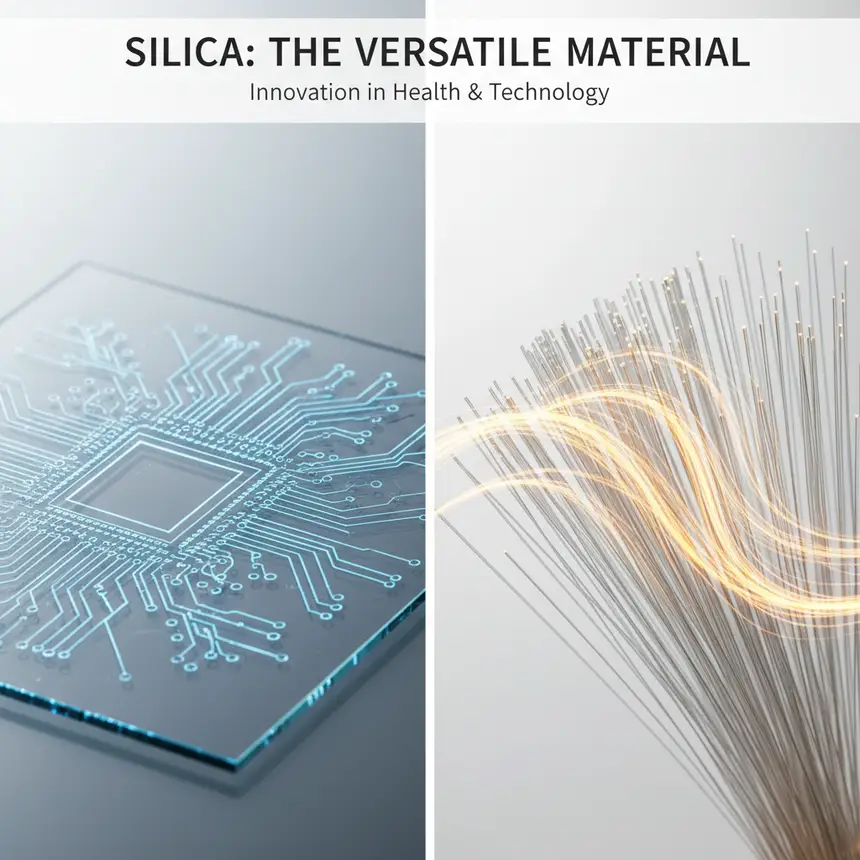
Glass Substrates vs. Optical Fibers: Diverse Uses of Glass and the Crucial Role of Silica
Glass, as a material, finds incredibly diverse applications in modern technology, with glass substrates and optical fibers each playing distinct roles in driving future technological progress. Glass substrates function as thin, flat panels that reliably support semiconductor chips and precisely connect electrical signals. They are primarily used within semiconductor packaging to create high-density circuitry. Their design allows for production in large panel formats, offering a structural advantage for processing multiple chips concurrently.
In contrast, optical fibers are slender strands designed for high-speed, long-distance data transmission using light signals. Comprising a pure glass core encased by a cladding, they leverage the principle of total internal reflection to transmit vast amounts of information across data centers and communication networks with minimal loss. While their form and function differ significantly, the common core element for both technologies is silica (silicon dioxide, SiO₂).
Silica is a naturally occurring material found as quartz sand and is the primary component of glass, providing its transparency, strength, and high heat resistance. Specifically, high-purity fused silica used in semiconductors and optical communications must have impurities reduced to less than 0.3%, ensuring over 99.7% purity. This ultra-high purity silica is essential for maximizing laser performance and guaranteeing the reliability of data transmission. The global silica market is projected to grow from $124.1 billion in 2024 to $186.2 billion by 2030, with a compound annual growth rate (CAGR) of 5.52%. Notably, the high-purity silica segment is expected to see an impressive CAGR of 15.4%, underpinning continuous technological innovation. Without these advancements in material science, our modern digital infrastructure would be unthinkable.
In contrast, optical fibers are slender strands designed for high-speed, long-distance data transmission using light signals. Comprising a pure glass core encased by a cladding, they leverage the principle of total internal reflection to transmit vast amounts of information across data centers and communication networks with minimal loss. While their form and function differ significantly, the common core element for both technologies is silica (silicon dioxide, SiO₂).
Silica is a naturally occurring material found as quartz sand and is the primary component of glass, providing its transparency, strength, and high heat resistance. Specifically, high-purity fused silica used in semiconductors and optical communications must have impurities reduced to less than 0.3%, ensuring over 99.7% purity. This ultra-high purity silica is essential for maximizing laser performance and guaranteeing the reliability of data transmission. The global silica market is projected to grow from $124.1 billion in 2024 to $186.2 billion by 2030, with a compound annual growth rate (CAGR) of 5.52%. Notably, the high-purity silica segment is expected to see an impressive CAGR of 15.4%, underpinning continuous technological innovation. Without these advancements in material science, our modern digital infrastructure would be unthinkable.
※ This post contains affiliate links. I may earn a commission at no extra cost to you.


The Future of Silica-Based Materials: Expanding Across Industries
High-purity silica's influence extends far beyond just glass substrates and optical fibers, expanding its value across various advanced industrial sectors. For instance, when combined with nanotechnology, silica plays a pivotal role in high-value applications such as substrates for 5G/6G communication, electrolyte materials for solid-state batteries, and even medical fillers.
Innovative forms like hollow silica are also contributing to the development of ultra-efficient insulation materials, garnering attention as solutions that maximize energy efficiency. These advanced materials are not merely improving the performance of existing products; they are unlocking entirely new functionalities and possibilities.
To truly grasp the future of technological advancement, a deep understanding of foundational material science, especially the characteristics and evolutionary path of key raw materials like silica, is indispensable. It's crucial to stay informed and watch with interest what new innovations silica will bring forth in the coming years.
Innovative forms like hollow silica are also contributing to the development of ultra-efficient insulation materials, garnering attention as solutions that maximize energy efficiency. These advanced materials are not merely improving the performance of existing products; they are unlocking entirely new functionalities and possibilities.
To truly grasp the future of technological advancement, a deep understanding of foundational material science, especially the characteristics and evolutionary path of key raw materials like silica, is indispensable. It's crucial to stay informed and watch with interest what new innovations silica will bring forth in the coming years.
Frequently Asked Questions
Q. How do glass substrates offer an advantage over traditional plastic substrates?
A. Glass substrates have the potential to boost data processing by up to eight times and reduce power consumption by half. They also allow for finer circuit integration, making them better suited for high-density semiconductor packaging.
Q. Both glass substrates and optical fibers use glass, but what differentiates them?
A. A glass substrate is a flat structural component that supports semiconductor chips and connects electrical signals. In contrast, an optical fiber is a thin, strand-like communication medium that transmits light signals over long distances. They differ completely in purpose and structure.
Q. Why is silica purity so critical in these applications?
A. The purity of silica directly impacts the performance of semiconductor and optical communication devices. Fewer impurities lead to greater laser stability and reduced signal loss during data transmission, enhancing the overall reliability and efficiency of the system.
Q. When is mass commercialization of glass substrates expected?
A. Several leading companies are targeting mass production between 2026 and 2027, with sample creation and performance verification currently in active progress.